
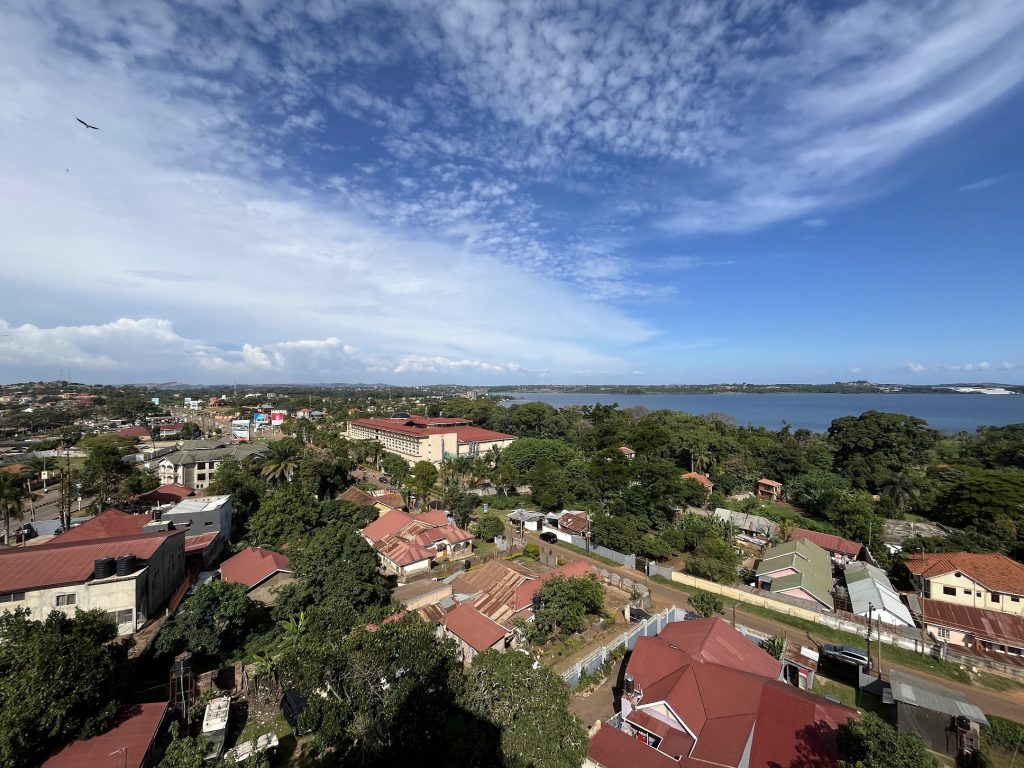
About 6 months ago, I moved to Entebbe with my girlfriend. We moved from Kampala to get away from the noise, crowd, and pollution of the big city. Entebbe is a laid back lakeside town. It’s also close enough to travel to Kampala for the day if we need to. In this guide, I’ll outline what it’s like living in Entebbe. I’ll cover cost of living, daily life, neighborhoods, and more.
Why Entebbe instead of Kampala
One of the main reasons we moved to Entebbe was for better air quality. Kampala is dusty and polluted with emissions from old vehicles, smoke from cooking, and output from industry. The air quality in Entebbe is much better. We can breathe. I actually feel healthier in Entebbe.
Another reason we moved was noise. In Kampala, we lived near a bar and a busy road. During the day, there were loud vehicles passing by and at night, there was loud music coming from the bar. We moved to escape the noise. Our place in Entebbe is much quieter.
Another nice thing about Entebbe is that it’s easier to get around. It’s a small city with a population of around 80,000. We can travel anywhere in 10-15 minutes. The main roads are also in good condition. Traffic is a bit more organized in Entebbe as well. To compare, in Kampala, it could take 45 minutes to travel across the city.
It’s also easy and affordable to get to the airport. This is convenient for me because I travel to my home country a couple of times per year. It’s nice being able to just order a ride and get to the airport in 15 minutes.
Of course, there are some tradeoffs. The main one is probably nightlife. We like going out once in a while. Nightlife in Entebbe is limited. If we want to party, we have to travel to Kampala.
There are also fewer restaurant options in Entebbe. In Kampala, there are dozens of nice restaurants to choose from for date night. In Entebbe, there are only a handful of decent restaurants.
It’s also a bit less convenient for things like doctors appointments and shopping. Sometimes, we have to travel to Kampala if we can’t find something in Entebbe. I also have to travel to Kampala to go to the immigration offices on occasion. Recently, I had to go to a dermatologist. The best one I could find was in Kampala.
Moving to Entebbe is a good choice if you prefer to live in a smaller city with a slower pace of life. It’s also nice if you like to be closer to nature or if you want to live near the water. If you want access to more big city amenities and nightlife, Kampala is the better choice.
Where We Live
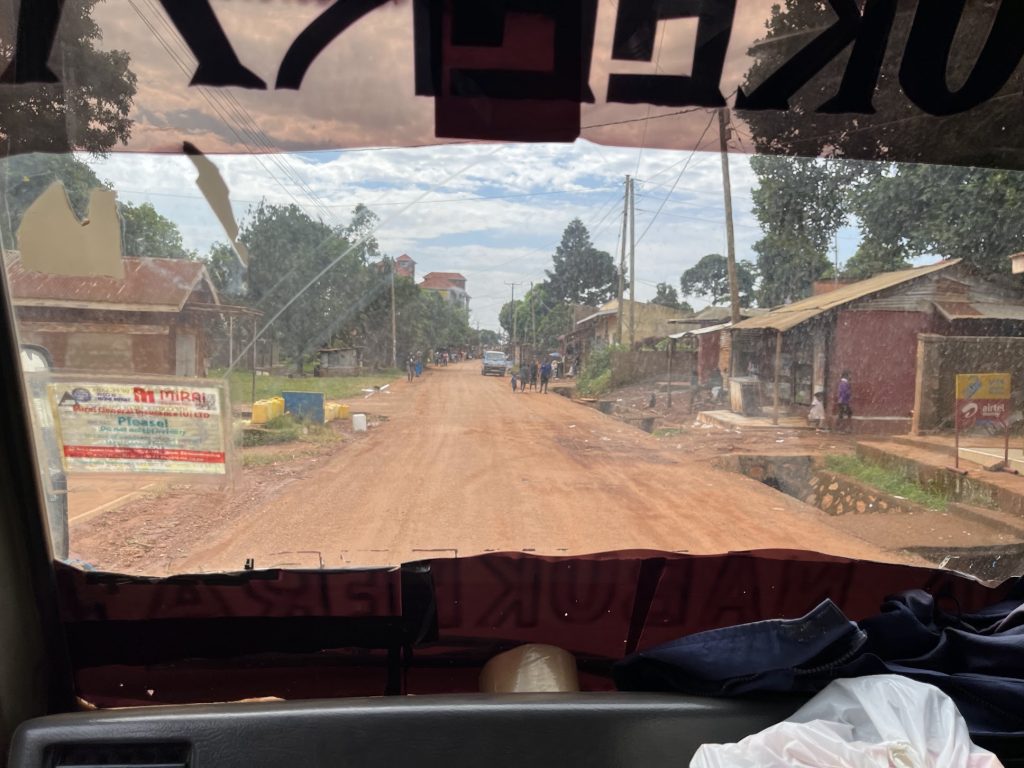
We rented an apartment in the Katabi neighborhood of Entebbe. It’s about an 8-10 minute drive to the city center or a 40 minute walk. Our apartment is about a 3 minute boda ride or 20 minute walk to the main road.
We live in a 2 bedroom 2 bathroom apartment. The place has a nice kitchen and a dining room with a spacious living room. There is a hot shower in one of the bathrooms. There are also 2 decent sized balconies. The bedrooms are also pretty large, which is kind of rare. There is also a large grassy common area in the front for our dog to run around.
We pay 1 million UGX per month for rent (about $225). Electricity costs around 60,000-80,000 per month ($16.50-$18). Water costs around 30,000-40,000 UGX per month ($6.80-$9). We pay 80,000 for wifi ($18). We also pay 10,000 for trash ($2.27). In total, we spend around 1.2 million UGX per month for rent and utilities ($272.80).
I like the area we picked. It is in a quiet area with some shops nearby. It’s nice to be able to walk out onto the road and buy ingredients if I run out of something while cooking. It’s close enough to the main road that I can walk. If money was no object, I would probably live on the lake or closer to the city center but the location is good for the price.
Our rent in Kampala was cheaper at 800,000 UGX. The utilities cost the same in both cities.
Working From Entebbe
The biggest issue when working from Entebbe is power cuts. When the power goes out, the wifi goes out, unless you have a backup generator, battery, or solar. This is extremely disruptive to work.
The power where we live is less reliable than it was in Kampala. Power outages are more frequent and last longer. Recently, the power was out all day for 3 days in a row. It was out for 8-10 hours. It only came back at night briefly. It regularly goes out for 2-3 hours. It goes out almost every day. Sometimes, it just flashes off and on. When that happens, the wifi router has to reboot, which is annoying.
If you need to be online at specific hours for work, you may struggle. In that case, you will need a backup. You could use mobile data. MTN and Airtel offer Mifi devices with built in batteries that allow you to work for several hours while the power is off. You could keep a backup battery for when the power goes out. If the power is out for 8 hours, your batteries may run out.
You could rent a home with a backup generator, if you have a higher budget. Then you wouldn’t need to worry about power cuts. If you don’t have to be online during a specific time every day, you can work around the power cuts.
The internet speeds are fine. We use the bronze plan from Simba Fibre and the speeds are good enough for streaming, making calls, downloads, etc. I think we get around 30Mbps download speed. They have faster plans if you need more speed. I think they offer up to 100Mbps. Starlink is also available in Uganda now with download speeds of up to 200Mbps.
There are a couple of co-working spaces in Entebbe if you prefer to work away from home. I haven’t tried them because I prefer working from home.
One thing I like about Entebbe is that it is a bit cooler than Kampala. I think the lake helps keep the city cooler, even though we’re not right on the lake. It never gets too hot and uncomfortable inside. I can comfortably work anytime.
Daily Life

I cook most of my own meals. I get tired of local food and when I order Western food in restaurants, it usually doesn’t taste quite right.
I buy most of my food at the Carrefour at Victoria Mall. It is a large, modern supermarket. They have most of the ingredients you’ll need. Sometimes, I shop at another supermarket called S&S. They have a little different selection.
I buy all of my fruits and vegetables at local markets near my home. They are cheaper that way. I also buy some other staples, like sugar, eggs, and milk, at roadside markets. It’s convenient and the price is the same as at the larger stores.
Groceries are somewhat expensive by local standards. Maybe slightly cheaper than they are in the U.S. Food prices in Entebbe are basically the same as food prices in Kampala.
A whole chicken costs around 21,000 UGX ($4.85). A loaf of bread costs 5,500 UGX ($1.26). 500 grams of mozzarella cheese costs 18,000 UGX ($4.15). A dozen eggs costs 6,000 UGX ($1.38).
I go out to eat a couple of times per month. A meal in a mid-range restaurant costs around 30,000-50,000 UGX ($6.90-$11.50). A meal at a local restaurant costs around 8,000-12,000 UGX ($1.85-$2.75).
Transportation is pretty affordable in Entebbe. From where I live, I can take a boda to the city center for around 3,000 UGX ($0.70). I can take a boda to the other side of the city for around 5,000 UGX ($1.15). The express taxi to Kampala costs 6,000-7,000 UGX ($1.40-$1.60). The area where I live is also walkable. If I just need to go out to buy some veggies or grab some snacks, I can just walk. I don’t take transportation every day.
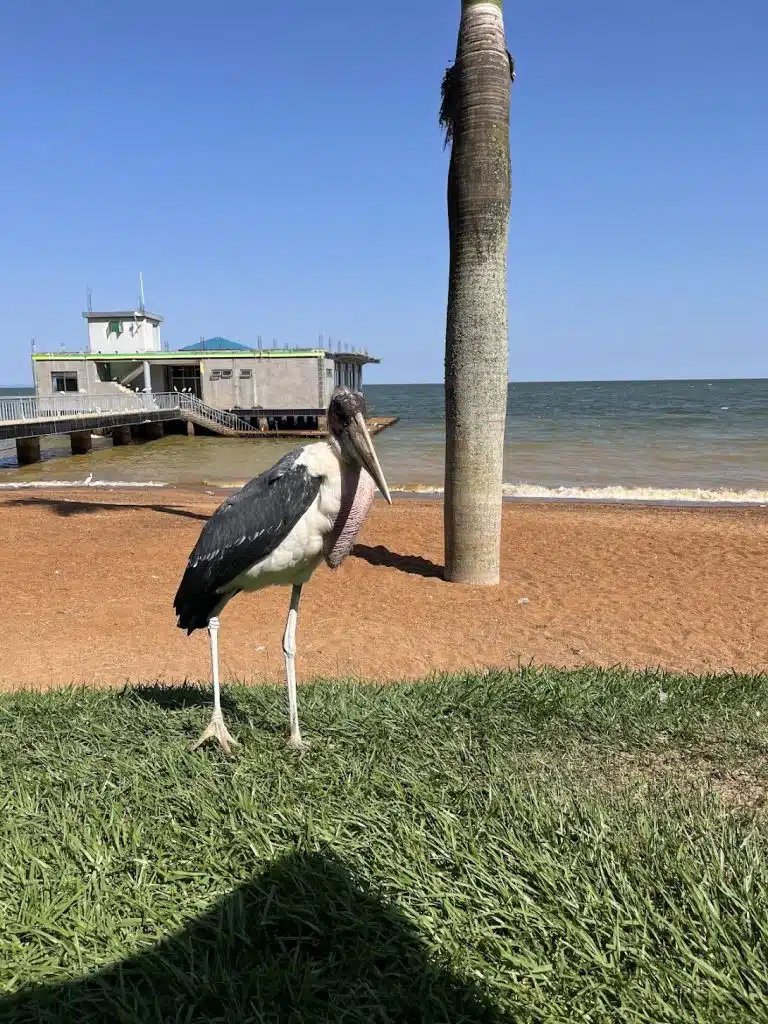
One nice thing about living in Entebbe is being near Lake Victoria. Probably once a month or so, my girlfriend and I go to the beach. There are several nice resorts with decent beaches. I like White Sands Beach and Aero Beach. The Entebbe botanical gardens is also nice. There aren’t any nice public beaches. You have to pay. Most charge 5,000 or 10,000 UGX for entry. ($1.15 or $2.30). The Entebbe Botanical Gardens charges 20,000 UGX ($4.75) for foreigners and 5,000 for locals.
The Airport

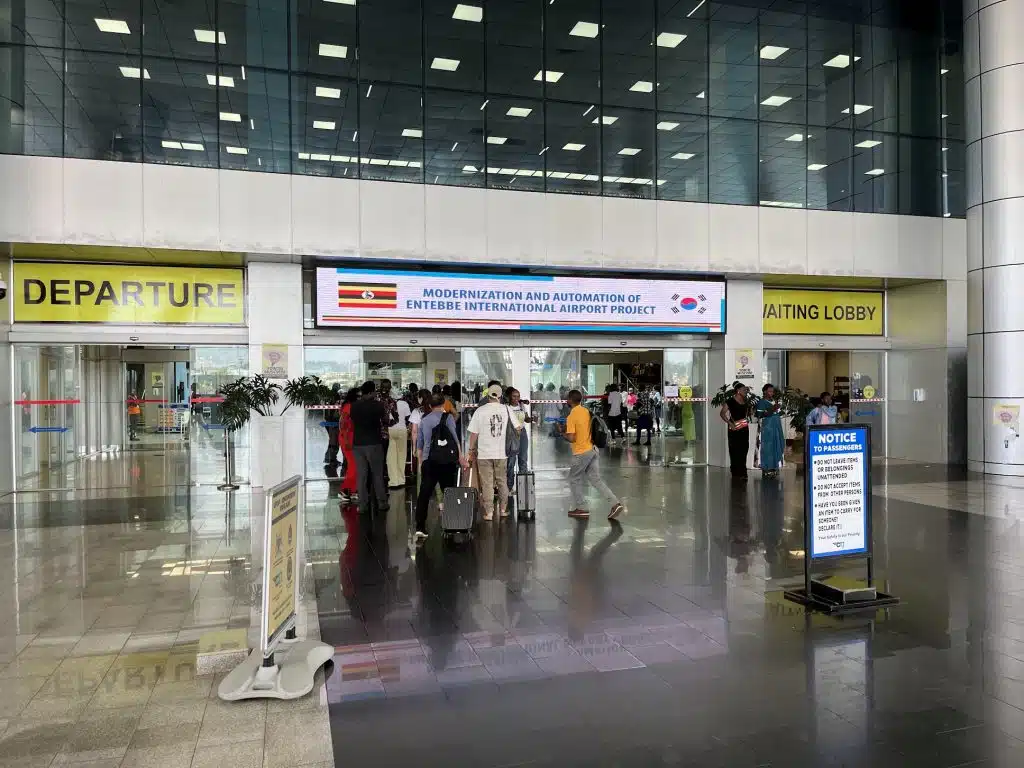
Uganda’s main international airport is located in Entebbe. If you’re flying in or out of Uganda, you’ll likely use this airport.
The airport is located at the end of the peninsula, about 10-15 minutes from the center of Entebbe. It’s far enough away that there isn’t much noise. It’s also not a huge airport. Uganda isn’t a major business or tourism destination. Airport traffic isn’t really a problem.
Living in Entebbe does make it much easier to travel. You can order a Bolt or Safecar to the airport for 25,000-30,000 UGX ($5.75-$6.90) and arrive in 20 minutes or so. When you come back, it’s easy to get home. This is really nice if you have to travel frequently.
When you live in Kampala, you have to travel all the way to Entebbe to fly. The trip to the airport is about 35 km or 22 miles. It takes 45 minutes to an hour. The cost is also much higher. A taxi from Kampala to the airport costs about 150,000-200,000 UGX ($35-$50).
What it Costs
My rent costs 1 million UGX ($225). Utilities including electricity, water, trash, and internet cost about 200,000 UGX ($46).
On average, we spend about 1.5 million UGX ($344) per month on food for 2 people. That includes groceries and ordering delivery once in a while.
On going out, we probably spend about 1.2 million ($276). That is a couple of date nights and maybe going to a couple of parties.
Transport costs around 100,000 UGX ($23). That includes a couple of trips to Kampala and back and taking bodas to the supermarket and around Entebbe for 2 people.
That’s around 4 million UGX or $900 for 2 people for our base expenses. Some months, we spend less. Maybe we don’t go out as much or we cook more often. Some months, we spend more. Last month, we bought a washing machine so our expenses were higher.
We live pretty comfortably. We could live on a lot less if we had to. For example, we could downsize to a 1 bedroom apartment. That would save maybe 200,000-300,000. We could go out less frequently or eat cheaper foods. That could probably cut at least 500,000 from our budget. If you’re living by yourself, your food and transport costs will also be lower.
It would also be easy to spend more. If we lived in a better location or in a higher end apartment, our rent would probably cost 2-3 million per month or more. If we ate out more frequently, we might spend another million or so per month.
For more in depth info on costs, check out my guide: Living in Uganda as a foreigner.
Getting to Kampala
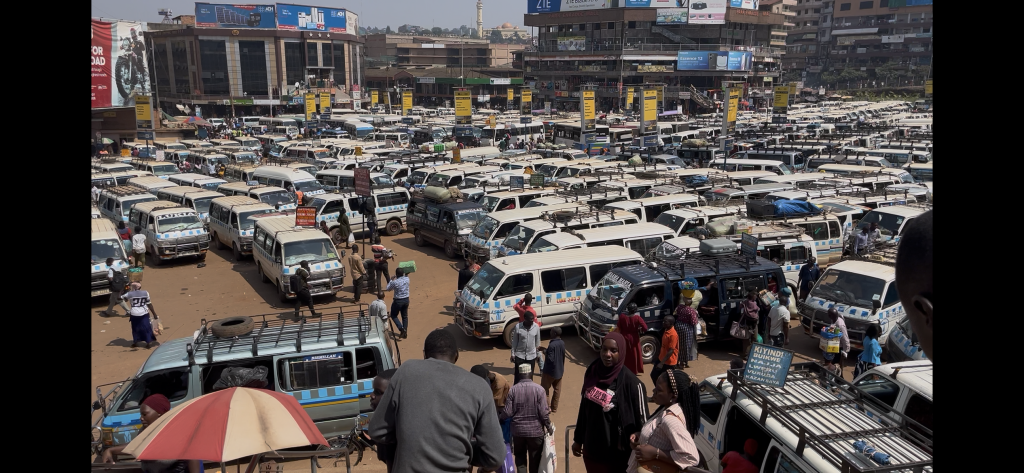
It’s easy to travel from Entebbe to Kampala. The cities are only 25 miles apart. There is an express taxi service that travels between the two cities without stopping. Taxis depart from several locations in Kampala. The trip takes 40 minutes to an hour, depending on where you’re going and how long you have to wait for the taxi to fill up. They cost 6,000-7,000 UGX one-way ($1.50-$1.75). Of course, you can also drive.
We go to Kampala once or twice per month. We may go for a doctor’s appointment, shopping, or going out to a party. The express highway between the two cities is safe and very well maintained.
For more info on traveling between these two cities, check out my guide: How to Travel from Entebbe to Kampala.
Would I Stay
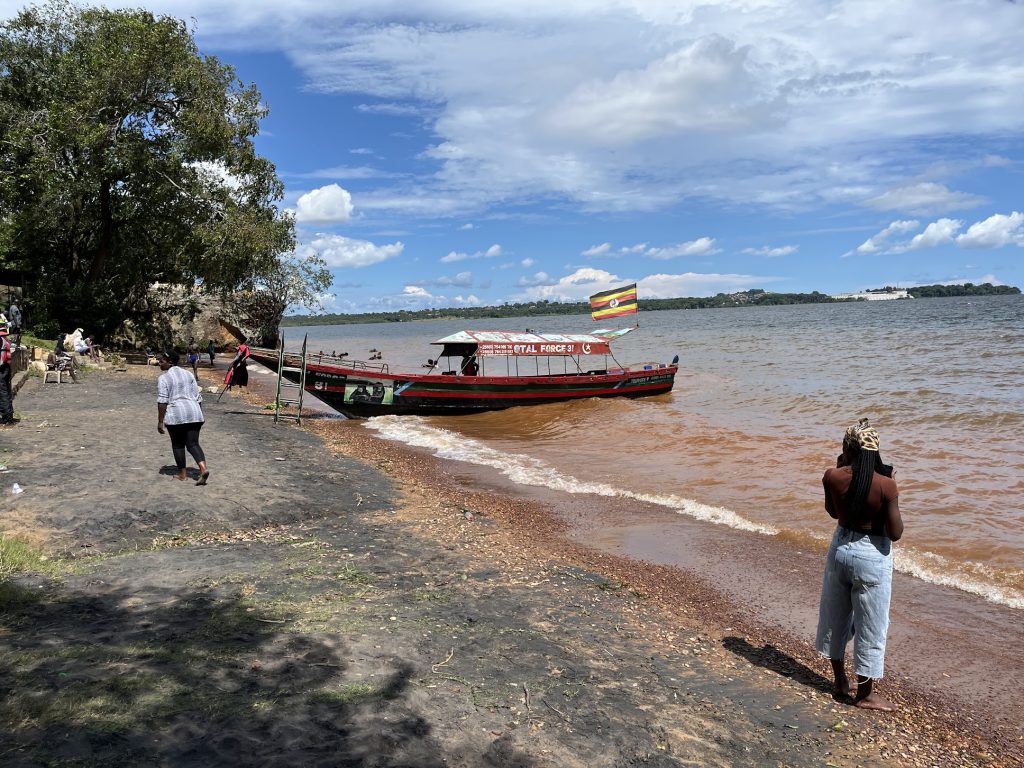
I was hesitant to move to Entebbe at first because I knew I was giving up some conveniences of living in a big city. At the same time, I knew life would be a little more laid back and comfortable in a smaller city. My girlfriend really wanted to move so I went along with it.
In the end, it was a good move. Entebbe is quieter. It’s easier to get around. The air quality is better. It also feels a bit safer. It’s also easy enough to travel to Kampala. Being near the airport is convenient as well when I make trips to the U.S. Overall, I’m glad we moved.
If you prefer to live in a smaller city, Entebbe is a good choice. It’s far enough from Kampala that you get to escape some of the crime, crowds, and chaos of the big city but close enough that you can still visit regularly. It’s also a good choice for those who prefer to be closer to nature. The lake is nice. Frequent travelers will also enjoy Entebbe. It may also be a good move for families. If you are a professional trying to build a career or someone who likes to go out and about all the time, Kampala is probably the better choice.

Zachary Friedman is an accomplished travel writer and professional blogger. Since 2011, he has traveled to 68 countries and 6 continents. He founded ‘Where The Road Forks’ in 2017 to provide readers with information and insights based on his travel and outdoor experience. Zachary is also an avid cyclist and hiker. He is currently based in Entebbe, Uganda. For more information on his journey and background, visit the About page. For inquiries and collaborations, please reach out through the Contact page. You can also follow him on Facebook.